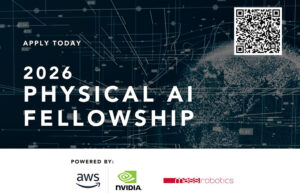
The Physical AI Fellowship provides robotics and AI developers with access to MassRobotics, AWs, and NVIDIA resources and mentorship.
Popular AI models aren’t ready to safely run robots, say CMU researchers
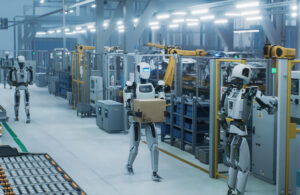
CMU and King’s College London evaluated how robots using LLMs behave when they have access to personal information.
How miniaturization is making robots smarter and more autonomous
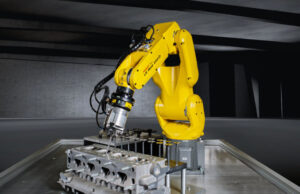
Miniaturization offers robotics designers new levels of power efficiency, nimbleness, and precision for a range of applications.
PickNik expands support for Franka Research 3 robot on MoveIt Pro
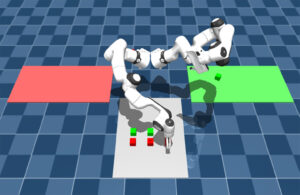
PickNik Robotics said this collaboration will help to address one of the central bottlenecks in AI and robotics development.
Bats inspire WPI researchers to develop drones using echolocation

WPI researchers are enabling aerial robots, smaller than 100 mm and weighing less than 100 g, to navigate without relying on vision.
TU Delft algorithm to enables drones to work together to transport heavy payloads

The TU Delft researchers said their algorithm enables drones to carry heavier payloads together, even in windy conditions.
Singapore’s National Robotics Programme reveals initiatives to advance robot adoption

The NRP aims to catalyse differentiated robotics capabilities in Singapore by funding use-inspired research and use-driven development.
Amazon, CMU partner on new AI Innovation Hub

The Hub’s initial focus areas leverage both institutions’ strengths in artificial intelligence and robotics, Amazon and CMU said.
ARM Institute opens technology project call to speed submarine manufacturing
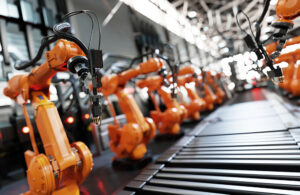
The ARM Institute said the technologies will be demonstrated in real, shipyard-representative environments by the end of the project.
Solving the labor crisis: How community colleges fuel the robotics workforce
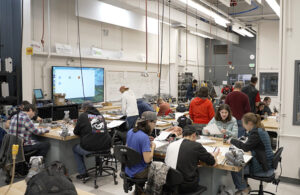
Community colleges like Sierra College offer mechatronics programs that directly address the robotics industry’s labor shortage.
Top 10 robotics developments of September 2025
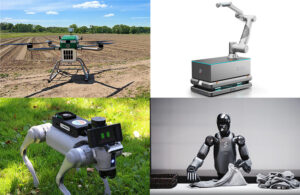
Between robotic companies shutting down, large funding rounds, and product releases, there was plenty of robotic news in September.
Oxford Robotics Institute director discusses the truth about AI and robotics

Nick Hawes, a professor of robotics and AI at the University of Oxford, talks about the reality and potential of these technologies.
IEEE study group publishes framework for humanoid standards

Framework focuses on addressing the unique risks and capabilities of humanoids to enable their safe and effective deployment across applications.
MassRobotics encourages high school girls interested in STEM to apply for Jumpstart Fellowship
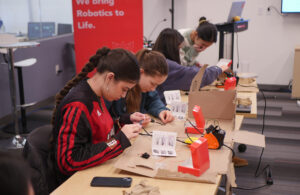
The Jumpstart program invites all female high school juniors and seniors with a passion for robotics and technology to apply, said MassRobotics.
Agility Robotics explains how to train a whole-body control foundation model
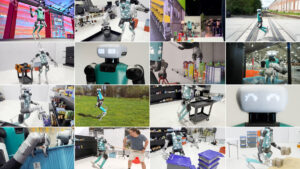
A whole-body control foundation model could help launch humanoid robots toward general-purpose capability, says Agility Robotics.
Amazon Robotics’ ViTa-Zero solves key robotics challenge
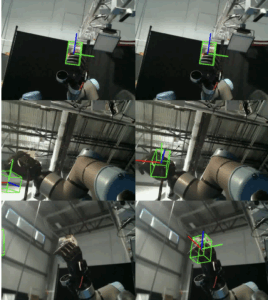
Amazon Robotics said the innovation lies in leveraging a visual model as its backbone and performing feasibility checking and test-time optimization based on physical constraints derived from tactile and proprioceptive observations.
Google DeepMind, Intrinsic build AI for multi-robot planning
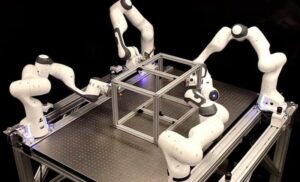
The researchers said the model learns to plan trajectories by trial and error, eventually developing generalized strategies that can be applied to new, unseen layouts.
Why humanoid robots aren’t advancing as fast as AI chatbots

UC Berkeley Prof. Ken Goldberg shares his thoughts about humanoid hype and the emerging paradigm shift in the robotics field.
Top 10 robotics developments of August 2025

Investments, leadership changes, earnings reports, new research, and new product releases took center stage in August 2025.
MIT roboticists debate the future of robotics, data, and computing

An international group of roboticists, including three from MIT, debated the best way to approach robotic manipulation moving forward.
Wearable robot helps ALS patients regain daily function

Exoskeleton combines machine learning and a physics-based model to learn each user’s unique movements and provide support for daily activities like eating and drinking.
How to make robots predictable with a priority based architecture and a new legal model

For robots to be predictable and adaptive, they need a priority-based architecture and a new legal model, argues a researcher.
